Our Courses
A Level
Sociology
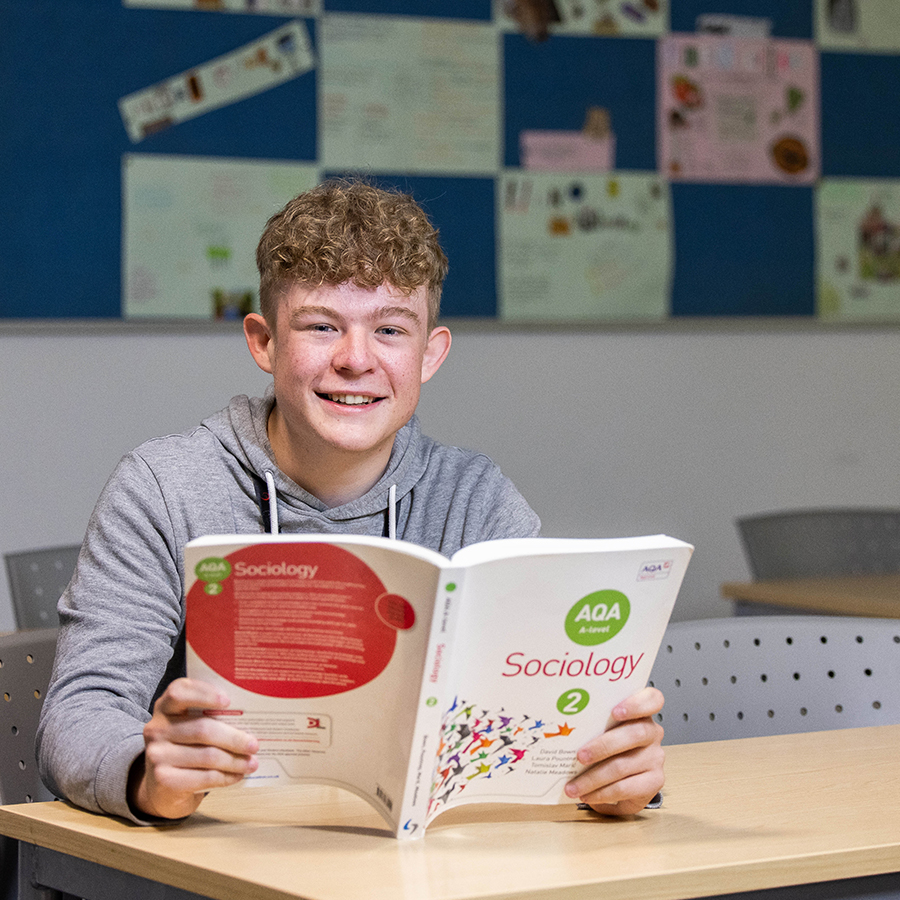
A Level Sociology is the study of society – how people live together, how institutions like schools, families, and the criminal justice system operate, and why inequality exists. It explores how factors like class, gender, ethnicity, and culture shape our lives, and tackles big questions such as why people commit crime, why some groups perform better in education, and whether the media reflects or distorts reality.
You’ll develop a deep understanding of social issues by studying topics like education, crime and deviance, families, religion, and social inequality. Along the way, you’ll sharpen key skills like critical thinking, essay writing, research evaluation, and interpreting data and evidence.
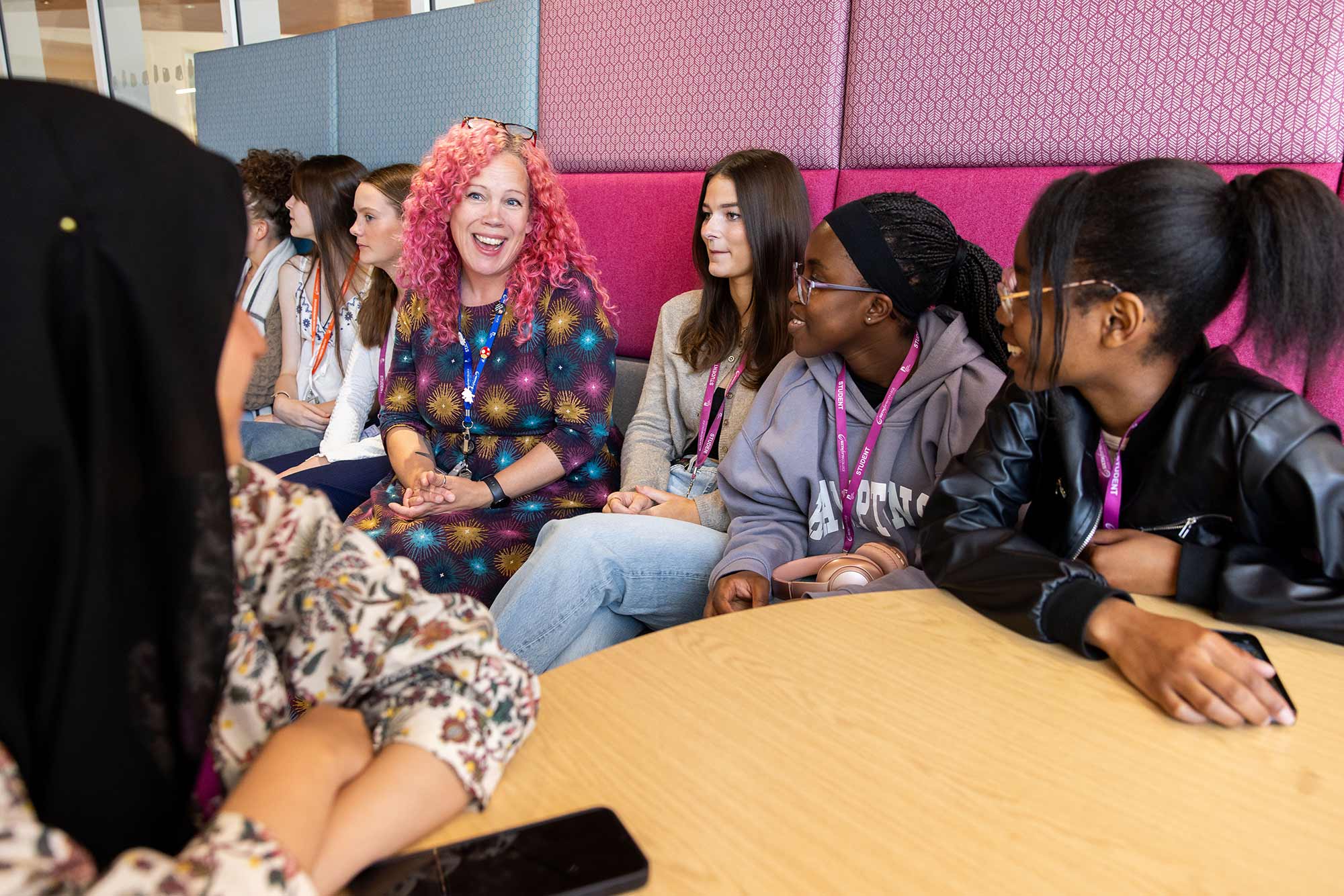
At Sixth Form College, Sociology is brought to life through engaging debates, discussions, and real-world investigations guided by experienced teachers. This subject is perfect if you want to understand how society works and are ready to ask challenging questions. It opens doors to a wide range of careers including law, criminology, social work, teaching, journalism, politics, and more.
Assessment
Exam: 100%
Awarding Body
AQA
Course Content
Paper 1: Education with Theory and Methods
- The role of education in society
- Differences in educational achievement (by class, gender, ethnicity)
- Relationships and processes within schools
- Sociological research methods
- Sociological theory
Paper 2: Topics in Sociology (usually two options are chosen)
- Families and Households
- Changing family structures
- Gender roles within the family
- Divorce, marriage, cohabitation
- Childhood
- Beliefs in Society
- Religion and ideology
- Secularisation
- The role of religion in society
Paper 3: Crime and Deviance with Theory and Methods
- Patterns and explanations of crime
- Crime and social class, ethnicity, gender
- Globalisation and crime
- Control, punishment, and victims
- Sociological theory and research methods
Begin.
Is this course right for me?
A Level Sociology is ideal for students who are curious about society and the world around them. You’ll explore topics like inequality, crime, education, poverty, and the role of family, and learn to question assumptions rather than just accept things as they are.
To succeed, you’ll need or develop skills in:
- Essay writing – structuring arguments and supporting them with evidence.
- Critical thinking – evaluating different viewpoints, theories, and research.
- Reading and summarising – managing lots of information and studies.
- Independent research – understanding sociological research methods.
- Memory and organisation – keeping on top of key studies, statistics, and theorists.
Personal qualities that help include curiosity about society, an open mind, a willingness to challenge stereotypes, and confidence to take part in discussions and debates. If you enjoy exploring society from multiple angles and discussing big social issues, Sociology is a great fit.
Belong.
Why study this with us?
At Sixth Form College, you’ll benefit from enthusiastic, expert teachers who make social issues relevant and engaging. Lessons include debates, group projects, and discussions on current affairs, with strong support for essay skills and exam techniques.
You’ll also access a wide range of enrichment opportunities, including:
- University taster days to experience Sociology at degree level.
- Guest talks from professionals in youth justice, social care, education, and charities.
- Debating societies and sociology clubs.
- Well-equipped classrooms with digital resources, case studies, and up-to-date data.
- Extra workshops on study skills and essay writing.
Studying Sociology with us means you’ll not only learn about society but also apply your knowledge and develop skills that universities and employers value.
Beyond.
Where can this course take me?
A Level Sociology is excellent preparation for a wide range of university degrees, including:
- Sociology, Criminology, Social Policy, Politics, Law.
- Education or Teaching, Social Work, Psychology.
- Youth and Community Work, Journalism, Media Studies.
- Anthropology, International Relations.
It also supports apprenticeship routes, such as:
- Youth work or community work.
- Health and social care.
- Policing, probation, or prison officer roles.
- Business or customer-facing positions.
- Housing officer roles.
Career options include:
- Social worker, youth worker, police officer, or probation officer.
- Teacher, journalist, or charity worker.
- Human resources, market researcher, policy advisor, or community development officer.
Studying Sociology shows employers you can analyse evidence, see different perspectives, and communicate clearly – skills valued across many fields.
Contact us
If you are unsure what course you think you should choose or what career you would like to aspire towards then contact Admissions: